
 en
 az
 ru
 tr
For Entrepreneurs: A Perspective on Budgeting Through the Lens of Financial Planning
- Date
- Views 48
For Entrepreneurs: A Perspective on Budgeting Through the Lens of Financial Planning
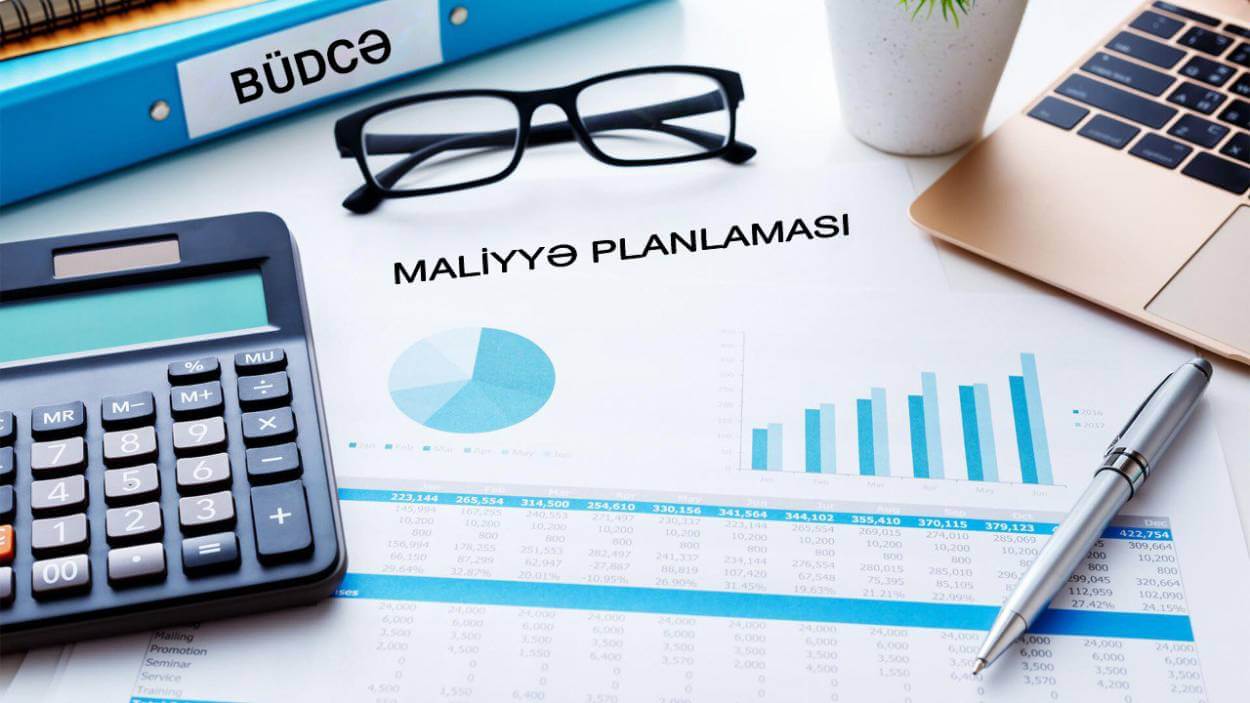
In an increasingly volatile global economic environment, amid evolving challenges and growing competition, effective financial planning is essential for maintaining the financial stability of enterprises and achieving strategic objectives. Financial planning is a fundamental stage in developing an enterprise’s financial strategy. It serves to forecast future financial results (income, profit, cash flows, etc.), reduce risks, and ensure liquidity.
At the same time, financial planning plays an important role at both the strategic and operational management levels of an enterprise. At the strategic level, the financial support required to achieve long-term objectives is determined, while at the operational level, the budget for current activities is prepared and implemented. Financial planning also makes it possible, in many cases, to anticipate events that could hinder the success of an enterprise and, if they occur, to analyze them and develop strategies to reduce or completely eliminate their impact.
In other words, financial planning is the process of determining future actions related to the formation and use of financial resources. Such planning aims to ensure that the reproduction process is adequately supported by financial resources.
In practice, financial planning takes the form of long-term, short-term, and flexible planning, depending on circumstances. Taking the above into consideration, the main objectives of financial planning can be summarized as follows:
- ensuring the efficient allocation of financial resources;
creating a balanced structure of revenues and expenditures;
aligning financial flows with production and sales plans;
ensuring the financial justification of investment decisions.
Budgets are among the key tools of financial planning in enterprises. A budget is regarded as a fundamental mechanism for planning an enterprise’s revenues and expenditures, ensuring financial control, and evaluating efficiency.
From the perspective of financial planning, preparing budgets is not limited to calculating expenses and forecasting revenues. It is also a process of optimizing resource allocation, monitoring financial and economic activities, and supporting strategic decision-making. Modern management concepts demonstrate that a properly designed budgeting system not only strengthens an enterprise’s financial stability but also enhances its competitiveness. This is because a budget represents planned and measurable activity.
Budgeting is a systematic process that ensures the planning, management, and control of an enterprise’s revenues and expenditures. At the same time, it is a management technology applied at all levels of a business. Aligning an enterprise’s strategic objectives with financial indicators, ensuring control over the activities of responsible organizational units, and promoting the efficient use of resources are among the main objectives of this process.
A budget is a plan of the activities of an enterprise and its various organizational units expressed in financial terms. Budget types vary depending on the classification criteria. Based on the indicators covered, budgets can be classified as follows:
- revenues and expenditures;
cash flows;
balance sheet budget.
Functionally, budgets are divided into:
- production;
sales;
procurement;
cost budgets.
Budgets are also prepared according to different periods: annually, quarterly, and monthly.
Budgets are prepared using three methods:
“Bottom-up” — the budget is prepared based on the activity plans of organizational units and is passed upward through the hierarchy to determine the consolidated results relating to the enterprise as a whole.
“Top-down” — the budget is prepared based on target indicators established by the enterprise’s management.
Iterative approach — the budget preparation process is carried out in defined stages. Information is first communicated from senior management to lower-level organizational units and then, in accordance with the hierarchical structure, transmitted from the lower levels upward. In this sense, it represents a synthesis of the previous two methods.
A manufacturing enterprise first prepares a sales budget. The sales budget (sales program) is an operating budget containing information on the planned sales volume, price, and expected revenue from the sale of each type of product. Thus, the sales budget serves as the basis for all other budgets.
The next budget to be prepared is the production budget. The production budget determines the required production volume for the period covered by the budget in order to support planned sales. The production budget is prepared solely in quantitative terms and falls within the responsibility of the individuals responsible for production decisions.
The enterprise should then prepare budgets for the use and acquisition of direct materials, showing the quantity of material inventories required to produce a particular type of product, their use, and the costs associated with acquiring them.
In parallel, it is necessary to prepare a payroll budget (labor cost budget for direct production workers) and a manufacturing overhead budget, covering the labor resources and other indirect production costs to be used in the production process. After forecasting the unit cost of finished products, it is important to prepare an inventory budget, which will affect the main balance sheet budget.
The next stage involves preparing the sales expense budget (selling and commercial expenses budget) and the administrative expense budget. It should be noted that the organizational unit responsible for sales is directly responsible for preparing the sales expense budget.
Based on the budgets mentioned above, a forecast income statement should be prepared to reflect the results of planned activities. It is important for this statement to be prepared before the beginning of the planning period. After preparing the consolidated cash budget (information on forecast cash flows by period), the next forecast statement — the cash budget — should be prepared.
At the final stage of the budgeting process, a forecast balance sheet is prepared and presented to the relevant users of management accounting information. Subsequently, budget performance must be continuously monitored and analyzed. When deviations between actual and planned figures are identified, analyzing these deviations makes it possible to determine the factors that caused them and provides an opportunity to influence these factors in the future.
Looking at international practice, enterprise budgeting is closely integrated with flexible planning and digital analytics. For example, models such as “Rolling Budget” and “Zero-based Budgeting” are widely used in the United States and European countries. A rolling budget enables an enterprise to adapt flexibly to market changes, while zero-based budgeting requires each expenditure item to be justified and helps reduce resource waste.
In recent years, the transition to automated digital budgeting systems through platforms such as Power BI, SAP BPC, and Oracle Hyperion has been accelerating. This approach increases the transparency of the budgeting process and the speed of decision-making. At the enterprise level, budgeting forms the foundation of effective financial management. A properly designed budgeting system supports sustainable development, facilitates decision-making, and enables the optimal use of resources.
In conclusion, budgeting in enterprises has become not only a key component of financial management but also an essential element of corporate governance. Budget information provides management with a strategic advantage in terms of risk management, resource allocation, and performance evaluation.